

BE AWARE, STOP
THINK
VERIFY
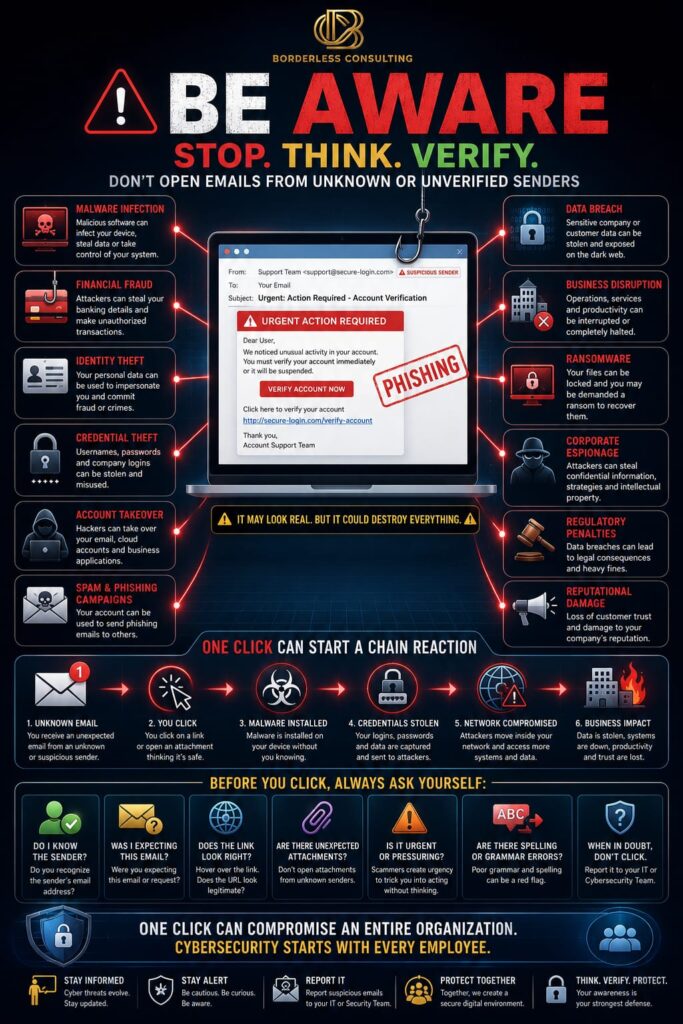
Protect Yourself. Protect Your Organization.
Every day, billions of emails are exchanged across the world, enabling communication, collaboration, and business operations. Unfortunately, cybercriminals also use email as one of their most effective weapons to deceive individuals, compromise organizations, and steal valuable information.
Cyber attacks are no longer isolated incidents affecting only large corporations or governments. They target organizations of every size, public institutions, private businesses, educational facilities, healthcare providers, financial institutions, and individual users. In today’s interconnected digital environment, every employee, contractor, and partner plays a vital role in protecting information and maintaining cybersecurity.
Understanding Phishing
Phishing is a form of cyber attack in which criminals attempt to trick recipients into revealing confidential information, opening malicious attachments, clicking fraudulent links, or authorizing unauthorized actions.
These emails are carefully designed to appear legitimate. They may imitate trusted companies, government agencies, financial institutions, suppliers, colleagues, or senior executives. They often create a false sense of urgency, requesting immediate action to verify an account, approve a payment, update credentials, review an invoice, or download an important document.
Remember:
If an email creates pressure, urgency, fear, or promises unexpected rewards, always verify before taking any action.
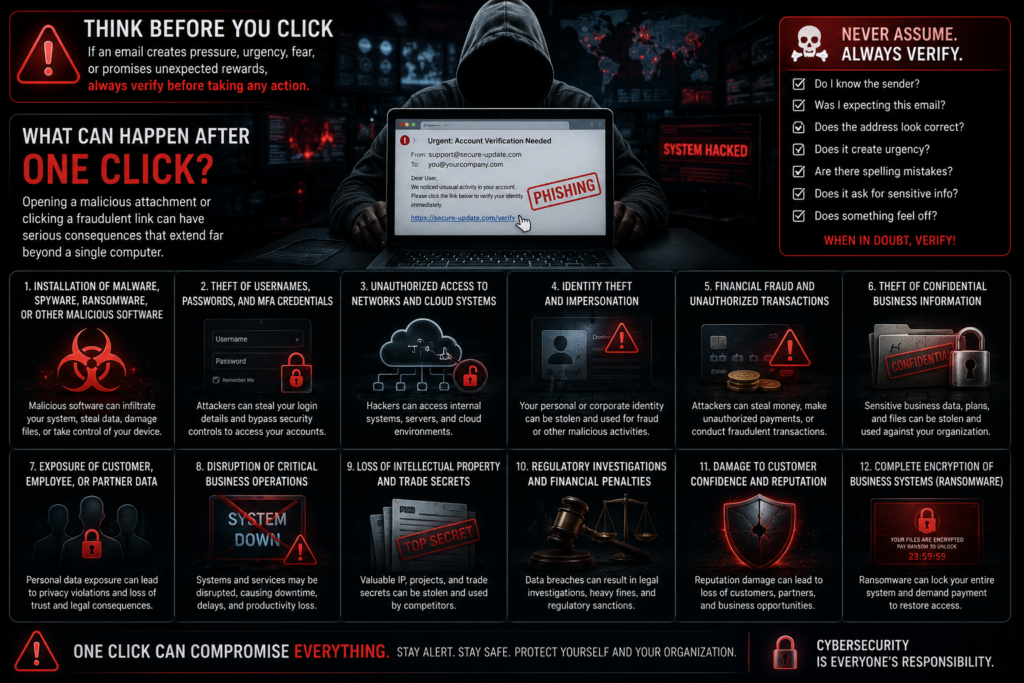
What Can Happen After One Click?
Opening a malicious attachment or clicking a fraudulent link can have serious consequences that extend far beyond a single computer.
Potential consequences include:
- Installation of malware, spyware, ransomware, or other malicious software.
- Theft of usernames, passwords, and multi-factor authentication credentials.
- Unauthorized access to corporate networks and cloud environments.
- Identity theft and impersonation.
- Financial fraud and unauthorized transactions.
- Theft of confidential business information.
- Exposure of customer, employee, or partner data.
- Disruption of critical business operations.
- Loss of intellectual property and trade secrets.
- Regulatory investigations and financial penalties.
- Damage to customer confidence and organizational reputation.
- Complete encryption of business systems through ransomware attacks.
A single compromised account can become the entry point for attackers to move throughout an organization’s network, escalating privileges, stealing sensitive information, and disrupting operations.
Warning Signs of a Phishing Email
Before opening or responding to any unexpected email, ask yourself:
- Do I recognize the sender?
- Was I expecting this email?
- Does the sender’s email address exactly match the organization it claims to represent?
- Is the message requesting urgent action?
- Does it ask me to click a link or download an attachment?
- Are there spelling, grammar, or formatting errors?
- Is the greeting generic instead of using my name?
- Is the request unusual or outside normal business procedures?
- Does the email ask for passwords, financial information, or confidential data?
- Does something simply “feel wrong”?
If the answer to any of these questions raises concern, stop immediately and verify the request through an independent communication channel.
Best Practices for Staying Safe
- Always verify the sender before responding.
- Never open unexpected attachments from unknown or unverified sources.
- Hover over links before clicking to verify their destination.
- Never provide passwords or authentication codes by email.
- Use strong, unique passwords for every account.
- Enable Multi-Factor Authentication (MFA) wherever possible.
- Keep operating systems and applications fully updated.
- Lock your workstation whenever you leave your desk.
- Report suspicious emails immediately to your IT or Cybersecurity Team.
If you accidentally click a suspicious link, disconnect from the network if instructed by your organization’s procedures and report the incident immediately. Early reporting can significantly reduce the impact of an attack.
Cybersecurity Is Everyone’s Responsibility
Technology alone cannot stop every cyber attack.
Firewalls, antivirus software, intrusion detection systems, and artificial intelligence provide important layers of defense, but they cannot replace informed human judgment.
Every employee is part of the organization’s security perimeter.
Every decision matters.
Every click matters.
Every report matters.
The actions of one individual can prevent—or enable—a significant cybersecurity incident.
Working Together
Cybersecurity is built on awareness, vigilance, communication, and shared responsibility.
By remaining alert, following established security procedures, and reporting suspicious activity promptly, every individual contributes to protecting colleagues, customers, critical information, and organizational operations.
Creating a secure digital environment is not solely the responsibility of the IT department or cybersecurity professionals. It is a collective commitment shared by everyone.
Always Remember
“Every day, millions of phishing emails are sent across the world. Most look legitimate. Some appear to come from trusted organizations. But all it takes is one click to compromise an individual, a business, or even critical national infrastructure. Stop. Think. Verify. Cybersecurity starts with you.”
– Julio Verissimo – President & CEO – Borderless Consulting
Before you click…
Stop.
Think.
Verify.
One moment of caution can prevent days, weeks, or even months of disruption.
One reported suspicious email may prevent a large-scale cyber incident.
Your awareness protects your colleagues.
Your decisions protect your organization.
Your vigilance strengthens our collective security.